
Why Make Quilts?
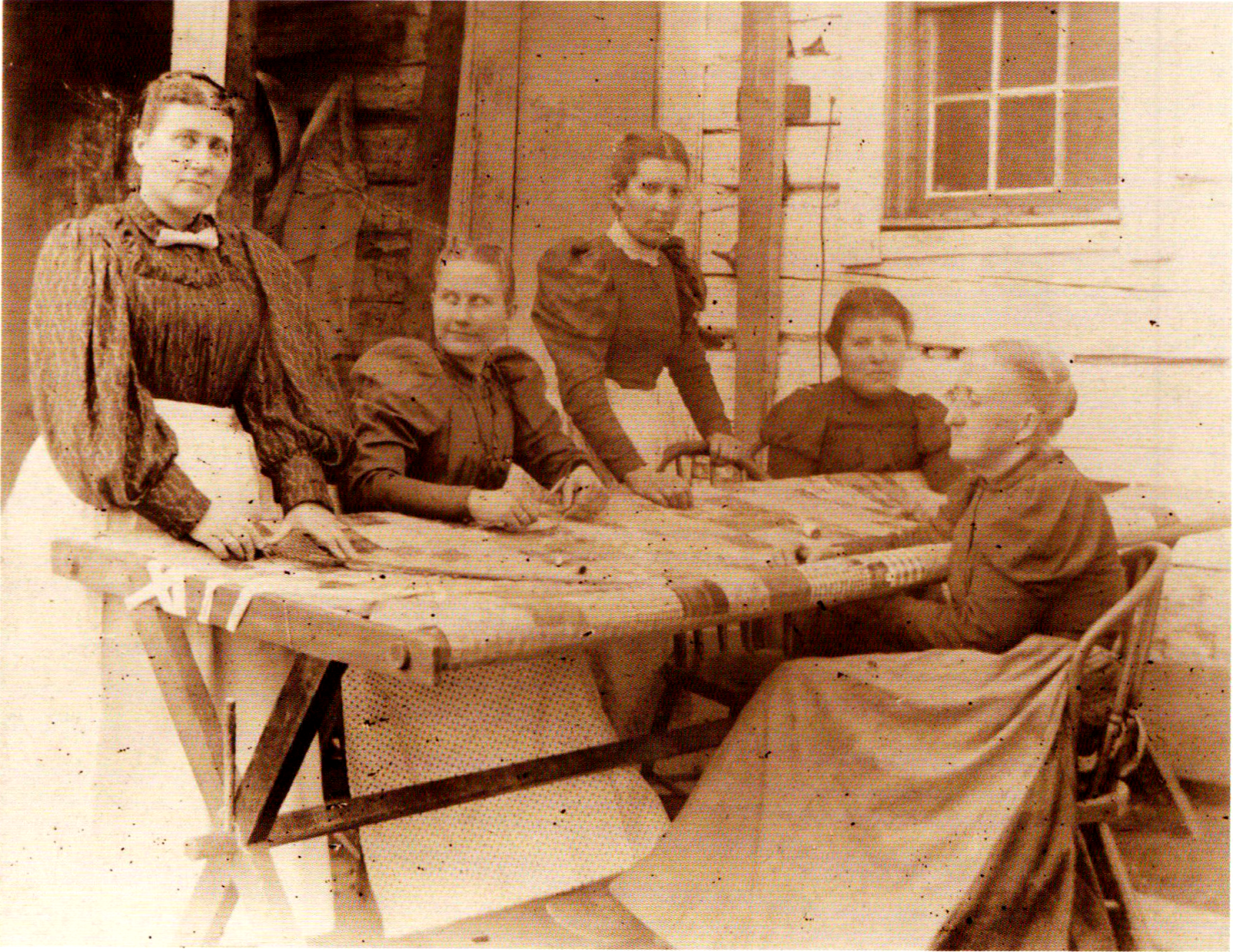
Recently, I’ve been learning about the California Gold Rush (for a film project I’ve been helping do research on) and it has made me think about American pioneer women. When you look up the quilts made during the 19th century in the western US (and it’s mostly literature at this point since the actual quilts have been lost to time), they aren’t purely utilitarian. In fact, the amount of artistic dedication obvious in these quilts surprises me. There is a myth that the origins of quilt making came from a place of economic hardship: women would collect rags over the years and patchwork the pieces together to make utility blankets. The myth goes that over time these “patchwork” quilts became the fashion and influenced the beginnings of aesthetic decisions in quilt making.
While there is an intrinsic practicality in the making of quilts - they are indeed very useful - these women went beyond that to make works of art. Why? If the purpose of a quilt is to keep you warm at night, why would these women add so many embellishments when it wasn’t necessary. Weren’t they too busy raising children, tending to the home and helping on the farm to labor intensely over these works? I imagine that leisure time was minimal during the second half of the 19th century, so creating elaborate quilts must have required great motivation.
Here is an anecdote that I like from an article in Uncoverings, a publication of research papers from the American Quilt Study Group, discussing the degree to which women were devoted to the artistic integrity of their quilts:
“This devotion to making quilts was certainly powerful, as attested by the granddaughter of nineteenth-century quilter Amelia Barbe: ‘I have some of her [Amelia’s] tops that she pieced together on the treadle sewing machine after she lost most of her eyesight. She was blind in one eye and had about only twenty percent vision in the other, but she kept on piecing. Some of the pieces don’t meet...but it’s interesting that she kept on trying to do the handiwork after she lost her eyesight.’”
To me, this is a testament to the creative rebellion of women in the 19th century. While the field of art at the time was thought to be outside of the “female sphere”, these quilt makers began using color and design in ways that made them pioneers in abstract design. This is particularly incredible considering these quilters were working around grueling schedules and in a society that was often times dismissive of their artistic legitimacy.
All people, not just women, make quilts today, and quilt making has been recognized as a worthwhile art form since its renaissance in the 1970s. But our American world today has unique challenges working against the modern quilter. In a society where you can click a button and get anything you want delivered to your door, why would anyone spend the time to make a quilt? A brand new prefab quilt can cost pennies compared to purchasing yardage of fabric and materials, not to mention all the work that goes into sewing it together.
I labor into the night on projects that are merely for my own amusement. Currently? Quilted curtains for the kitchen. I could easily buy curtains, and they would be significantly cheaper and would take only 10 minutes to purchase online. They would arrive within a few days, instead of the weeks it is taking me to quilt these ones.
So many quilters persevere as a new creative rebellion in the 21st century. It seems nonsensical to be a hand maker in our modern world with the amount of material abundance that we enjoy. Thus the answer to my question of why make quilts in the first place boils down to three outcomes: self expression, the means for personal resistance and the value of aesthetics over convenience.
It is hard to find many similarities between the American pioneer women of the late 19th century and myself. But perhaps through quilt making, we may work on common ground.
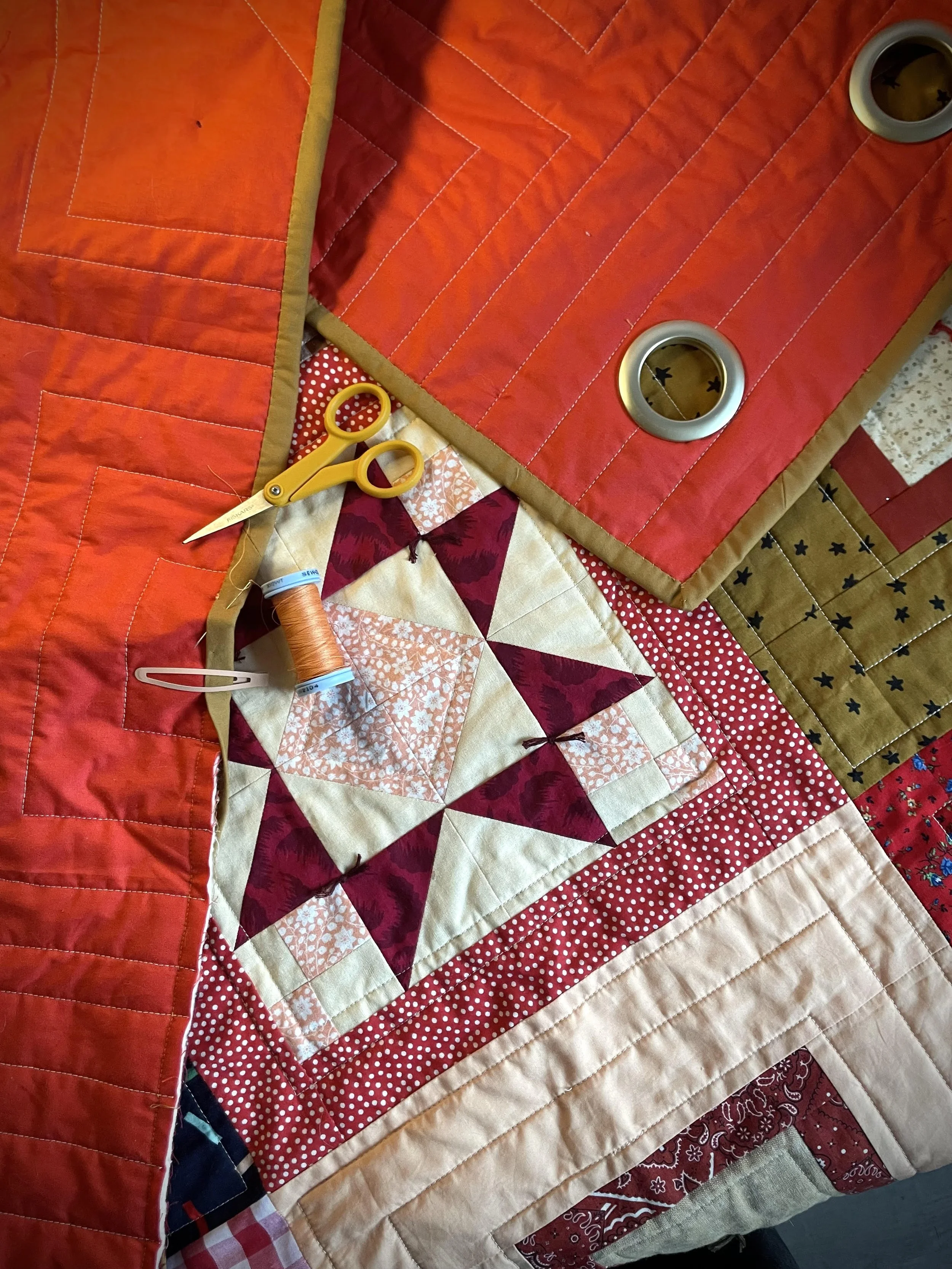
Quilt curtains that I am currently working on.
Only the binding to go!
Sources:
Crothers, Pat. “Gender Misapprehensions: The "Separate Spheres" Ideology, Quilters, and Role Adaptation, 1850-1890”. Uncoverings: Research Papers of the American Quilt Study Group, vol. 14, 1993. Quilt Index, https://quiltindex.org/view/?type=page&kid=35-90-170.